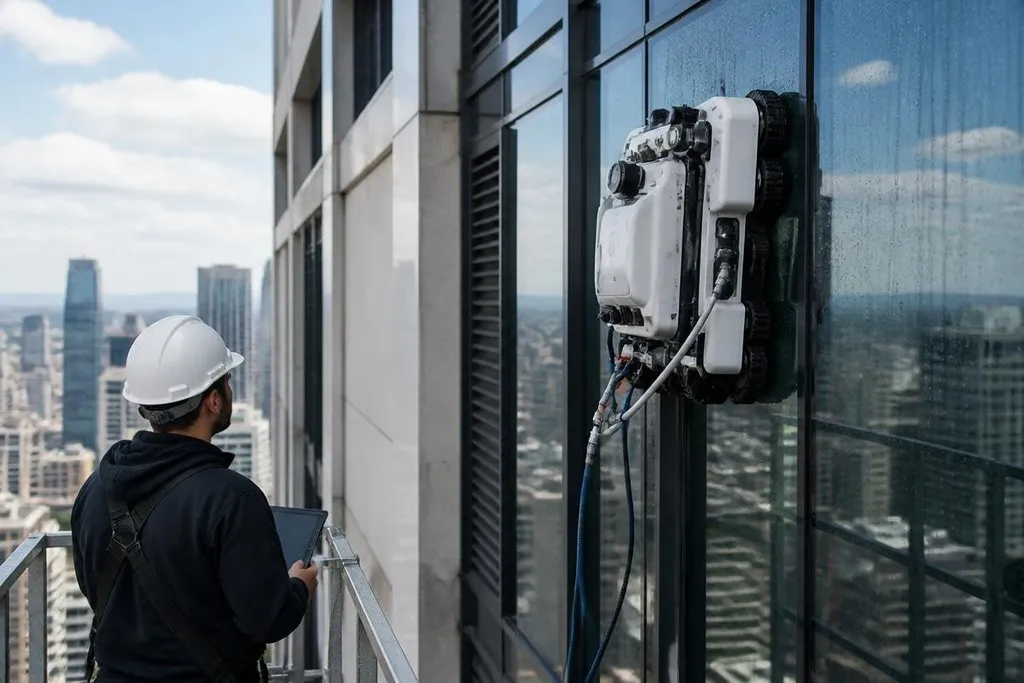
A robot can scrub glass without getting tired, but a skyscraper gives it a harder problem than a flat wall. The machine must stay attached, deal with ledges and window frames, manage water, and stop safely when wind or a sensor causes trouble.
- Suction works best on clean, smooth glass
- Cables and anchors still matter above the street
- Human supervision remains part of the job
The building is the first problem
On a tower, the cleaning robot faces a changing surface. Glass panels may sit beside metal frames, stone sections, vents, joints, or narrow ledges.
Each change can affect the robot’s grip and its path. Suction cups need a sealed contact area, so dust, damaged glass, deep joints, or a small gap can weaken that seal.
Magnetic wheels avoid that problem on steel, but most skyscraper exteriors contain large areas where magnets have nothing to hold.
A climbing robot also needs to know where it is. Cameras, laser sensors, and contact sensors can help it detect edges and obstacles. The software must turn those readings into safe movements, then stop when the surface differs from its map.
That makes a building survey part of the cleaning work. A robot designed for one glass facade may need new routes, grip settings, or safety checks before it works on another tower.
Staying attached is only half the job
The robot needs a way to remain connected if its main grip fails. A safety line attached to a roof anchor can limit a fall, but the line can also snag on ledges or pull against the robot as it moves.
Some systems may use a frame, rail, or cable that supports the machine from above. Those parts add setup work, inspection, and limits on where the robot can travel. The building owner still needs approved anchor points and a plan for recovering the machine.
Water creates another design problem. A scrubber must carry clean water, remove dirty water, or work with little water. Runoff can stain lower windows, reach pedestrians, or enter vents. Brushes and squeegees also need enough pressure to clean without putting extra force on the glass.
The roof edge is where a window-cleaning robot faces the risks a smooth demo leaves out. I'd trust a cleaning claim only after Robot24.com's building-robot reports show the roof system, weather limits, and stop plan used near people.
Autonomy has a narrow safe role
A fully independent robot would need to detect grip loss, weather changes, unexpected obstacles, and people below. It would also need a safe way to pause and wait for help. Those requirements make human oversight hard to remove.
A more practical setup may divide the work. Software handles a mapped route, speed, and brush pressure while a trained operator watches the robot, the cable, and the area below. The operator can take control when the facade changes or a sensor reports a problem.
Wind deserves special attention. A robot hanging on a wall can swing, twist its cable, or lose contact when gusts push it away from the glass. A cleaning plan may need weather limits, ground barriers, radio links, and a recovery method before the first window is touched.
The machine also has to prove that it cleans well. A building manager will care about missed dirt, streaks, water use, setup time, and the condition of seals or coatings after repeated work. A robot that moves safely but leaves marks still creates a manual cleanup job.
A practical buying checklist
Before approving a skyscraper-cleaning robot, check these points:
- Surface plan: list glass, frames, stone, vents, joints, and ledges on the target facade.
- Grip test: verify suction, wheels, or another attachment method on the actual materials.
- Fall protection: confirm anchor points, cable routes, rescue steps, and inspection duties.
- Weather limits: set rules for wind, rain, lightning, and poor visibility.
- Cleaning result: measure dirt removal, streaks, water use, and damage after repeated runs.
- Human control: name the operator, the stop method, and the person who can clear the area.
I’d wait for a robot with site-specific trials and a clear recovery plan before putting it on a tall building. The next useful proof is a full cleaning run across mixed facade materials, with the safety system shown from start to finish.